
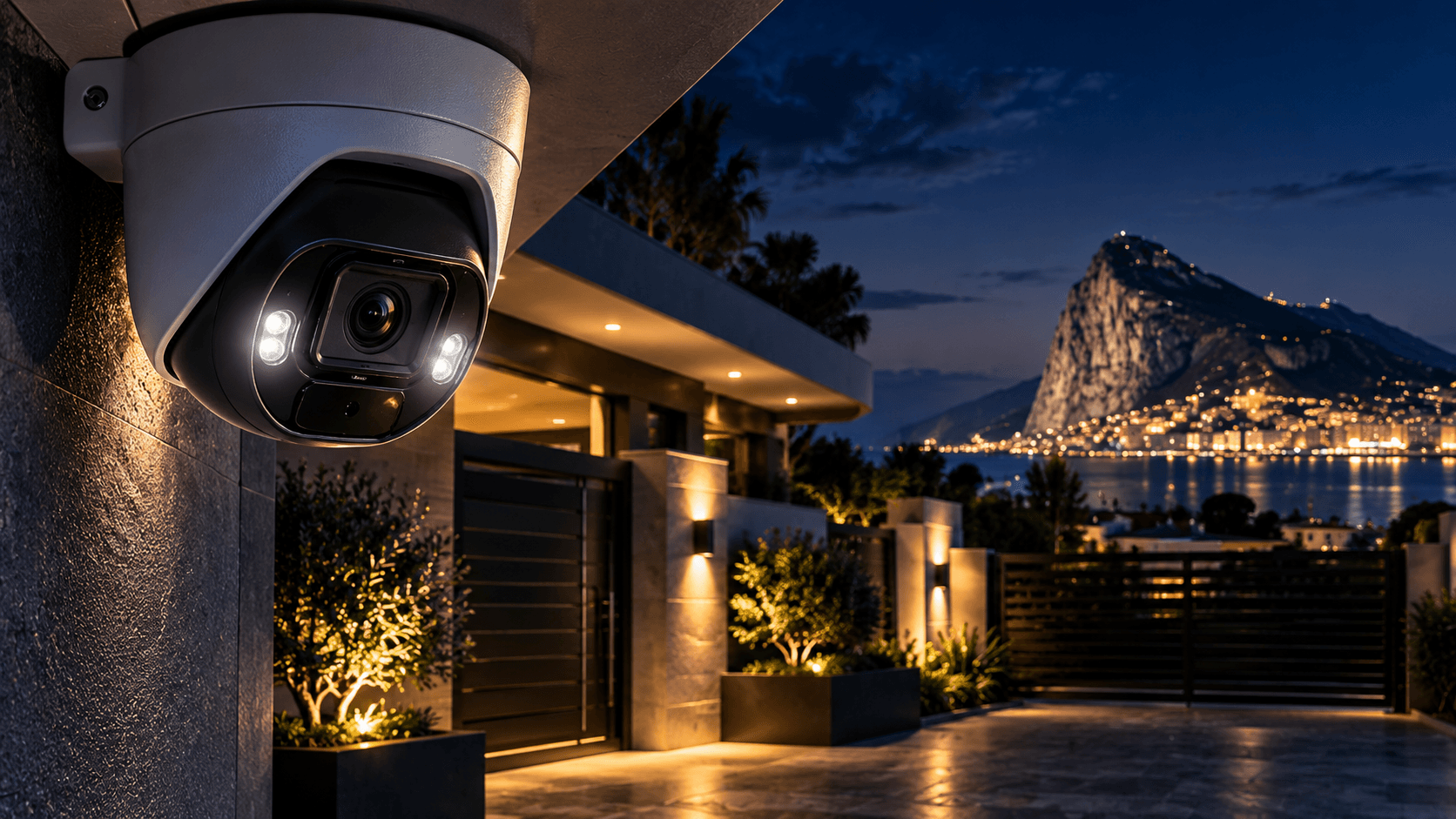
Installing CCTV is one of the most effective ways to improve security around a home or business. Modern cameras can provide excellent image quality, intelligent detection, remote viewing and continuous recording. But there is one question that is often overlooked: Have you actually checked what your CCTV can see at night? A camera producing a crystal-clear image at midday can behave very differently at 2am. Poor lighting, infrared reflection, incorrect positioning, dirty lenses, motion blur and even nearby walls can dramatically affect the usefulness of CCTV footage after dark. And unfortunately, the middle of an incident is the worst possible time to discover that your cameras aren't capturing what you expected. At Fortify Security Systems, we believe CCTV should be judged by the footage it can provide when you actually need it, not simply by how good the picture looks immediately after installation.
Daytime CCTV Can Be Deceptive
During daylight hours, modern CCTV cameras have plenty of available light to work with. Colours are clear. Faces are easier to distinguish. Vehicles are visible. Movement generally produces sharp images. When available light disappears, the camera has a much more difficult job. Depending on the equipment and environment, the camera may switch to infrared illumination, use supplementary white light or rely on its low-light imaging capabilities. That's when weaknesses in an installation can become apparent. A system can technically be recording 24 hours a day while still producing footage at night that isn't particularly useful.
Seeing Something Isn't the Same as Identifying It
This is an important distinction. A camera might clearly show that someone entered an area, but that doesn't necessarily mean the footage is detailed enough to identify that person. The same applies to vehicles. You might see a vehicle arrive, but can you clearly distinguish useful details? This is why camera placement should be based on the objective of each camera rather than simply trying to cover the largest possible area. Some cameras may be intended to provide an overview of a property. Others should be positioned specifically around entrances, gates, doors, corridors or other locations where identification is more important. More coverage isn't always better coverage.
Infrared Reflection Can Ruin an Otherwise Good Image
Many CCTV cameras use infrared illumination to see in darkness. It works extremely well when the camera is installed appropriately, but infrared light can also reflect from nearby objects. Common examples include:
- Walls
- Fascias
- Drainpipes
- Glass
- Signs
- Gutters
- Vegetation
- Spider webs
- Other highly reflective surfaces
The camera may then expose the image based on that bright reflection, leaving the area you actually want to monitor much darker. This is particularly common where cameras are mounted very close to walls or under certain architectural features. During the day, everything can look perfectly normal. At night, the problem becomes obvious.
Dirty Cameras Become a Bigger Problem at Night
Outdoor cameras are exposed to Gibraltar's weather, dust and general environmental conditions. Over time, lenses and camera covers can accumulate dirt. Spider webs are another surprisingly common CCTV problem. During daylight, a small amount of contamination might barely be noticeable. At night, infrared illumination can reflect directly from dust, moisture or a spider web sitting immediately in front of the camera. The result can be glare, haze or large bright areas across the image. This is one reason CCTV maintenance shouldn't only involve checking whether the camera is online. The physical condition of the camera matters too.
Motion Blur: The Image Looks Good Until Someone Moves
A static nighttime image can look excellent. Then somebody walks through it. Low-light conditions often require the camera to make compromises to produce a brighter image. Depending on the configuration, this can result in increased motion blur. A person's face might therefore look reasonably clear while they are standing still but become significantly less useful while they are moving. The same problem can affect moving vehicles. Correct camera configuration, suitable lighting and choosing the right equipment for the environment can all make a significant difference.
Lighting Can Help — But It Needs to Be Considered Properly
More light isn't automatically the answer. Poorly positioned lighting can create its own problems. A bright light pointing towards the camera may create glare or make other parts of the image appear darker. Strong differences between brightly illuminated and dark areas can also make image capture more challenging. The objective is to create a balanced environment where the camera can capture the area that matters. Modern cameras also offer increasingly sophisticated low-light and supplementary lighting technologies, but these still need to be selected and configured appropriately. Technology can't completely compensate for poor positioning.
Camera Positioning Matters More Than Megapixels
Camera specifications are important, but simply choosing the highest-resolution camera available doesn't guarantee the best security. An 8MP camera pointing in the wrong direction is still pointing in the wrong direction. Before selecting equipment, we consider things such as: What are we trying to see? At what distance? During which lighting conditions? Is the camera providing an overview or identification? Where is somebody most likely to enter the property? Are there potential blind spots? Will nearby surfaces interfere with night-time illumination? These questions often have a bigger impact on the effectiveness of a CCTV system than simply comparing megapixel numbers.
Intelligent CCTV Also Depends on Good Design
Modern CCTV systems can provide intelligent features such as human and vehicle detection, perimeter protection and event-based notifications. These technologies can significantly improve the usefulness of CCTV by helping distinguish meaningful activity from irrelevant movement. But intelligent analytics still depend on the camera having a suitable view of the area. Incorrect angles, obstructions, inappropriate detection zones or poor environmental conditions can affect performance. The hardware and software need to be configured around the property rather than simply left on default settings.
Don't Forget the Recording System
The cameras are only one part of CCTV. You also need to know that footage is actually being recorded. A camera can appear perfectly normal on a monitor or mobile app while an underlying recording problem goes unnoticed. Storage capacity, hard-drive condition, recording schedules and retention periods should therefore form part of routine CCTV checks. Ask yourself: If something happened three weeks ago, would the footage still be there? The answer depends on the number of cameras, resolution, bitrate, compression, recording configuration and available storage. This is something Fortify can assess when reviewing an existing CCTV installation.
Test Remote Access Before You Need It
Another common issue is discovering that remote access no longer works at exactly the wrong moment. Phones get replaced. Passwords are forgotten. Users leave businesses. Routers are changed. Internet connections are upgraded. Apps are updated. Security permissions change. Remote viewing should therefore be periodically checked rather than assumed to be working simply because it worked six months ago. For businesses, it is also worth reviewing who still has access to the CCTV system. Former employees, contractors or previous installers shouldn't retain access unnecessarily.
CCTV Maintenance Is About More Than Cleaning Cameras
A useful CCTV maintenance visit should consider the system as a whole. That can include checking:
- Camera condition and positioning
- Night-time image performance
- Infrared and supplementary lighting
- Intelligent detection configuration
- Recording and storage
- NVR/DVR operation
- Remote access
- User permissions
- Network connectivity
- Physical condition and cleanliness
Small problems discovered during maintenance can often be corrected before they become much bigger problems.
Already Have CCTV? You May Not Need to Replace It
This is particularly important. If your existing CCTV system isn't performing as well as you would like, that doesn't automatically mean everything needs replacing. Sometimes the solution may be as straightforward as repositioning a camera, changing its configuration, cleaning equipment, improving lighting, replacing a failing hard drive or adding coverage to a particular blind spot. At Fortify, we can assess and take over suitable existing CCTV systems, even where they were originally installed by another provider. We'll look at what you already have, identify what can continue to be used and recommend improvements where they genuinely make sense.
Try This Tonight
There's a very simple CCTV test that any home or business owner can carry out. Wait until it's properly dark and open your CCTV system. Don't just check whether the cameras are online. Look carefully at each image. Can you clearly see your entrances? What happens when somebody walks through the picture? Are faces clear? Are there bright reflections? Are any areas unexpectedly dark? Can you see the route somebody would realistically take towards the property? Are there blind spots? Then check that the footage is actually being recorded and that you can successfully play it back. You may be surprised by what you find.
Good CCTV Is About Useful Footage
Security cameras aren't there simply to look reassuring on the side of a building. They have a job to do. They should provide appropriate coverage, detect relevant activity, record reliably and produce footage that is useful when an incident occurs. That means considering the system during the day and at night. At Fortify Security Systems, we design, install, maintain, upgrade and take over CCTV systems for homes and businesses across Gibraltar. Whether you need a completely new installation or simply want to know whether your existing cameras are providing the protection you think they are, we can help. Because having cameras isn't the objective. Having useful footage when it matters is.